There have always been fads, in cinema like in everything else. Among the more irritating fads from a decade ago – whisker-thin depth of field and uncoated optics producing massive flare – have largely gone by the wayside. Today, a hot, new trend has emerged, embraced by the world’s hippest cinematographers: low-cost RGB LED lighting. One can partly attribute this trend to the advances in overall LED technology, especially the advent of much brighter surface mounted diodes. The fact remains, however, most entry and mid-level RGB lighting units are designed for the stage – not the cinema.
The result cam be a serious flicker, apparent, most notably, in the deeper shadows and the underexposed potions of the frame. In a recent production inside a nightclub, the RGB strip panels lining the walls introduced a pernicious flicker that could only be partially mitigated by a 184º shutter setting in the camera. Adding to our woes, the out-of-sync fluorescent tubes and neon signs in the bar area made matters worse.
Despite the advances in LED technology, the RGB flicker problem continues to plague us,. The challenges we face, especially on location, requires a good understanding of your RGB lights’ behavior, at full intensity and in a dimmed state. This understanding is imperative in order to shoot with confidence in an anything-goes, random discharge lighting environment.
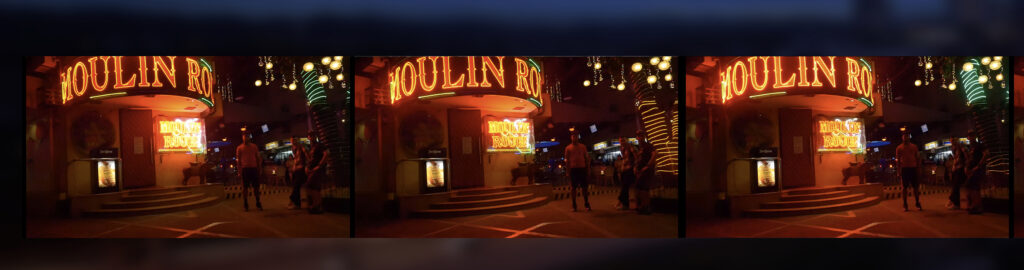
The flicker risk is everywhere. Don’t let your RGB LED lighting make matters worse!